By COLIN McEVERS
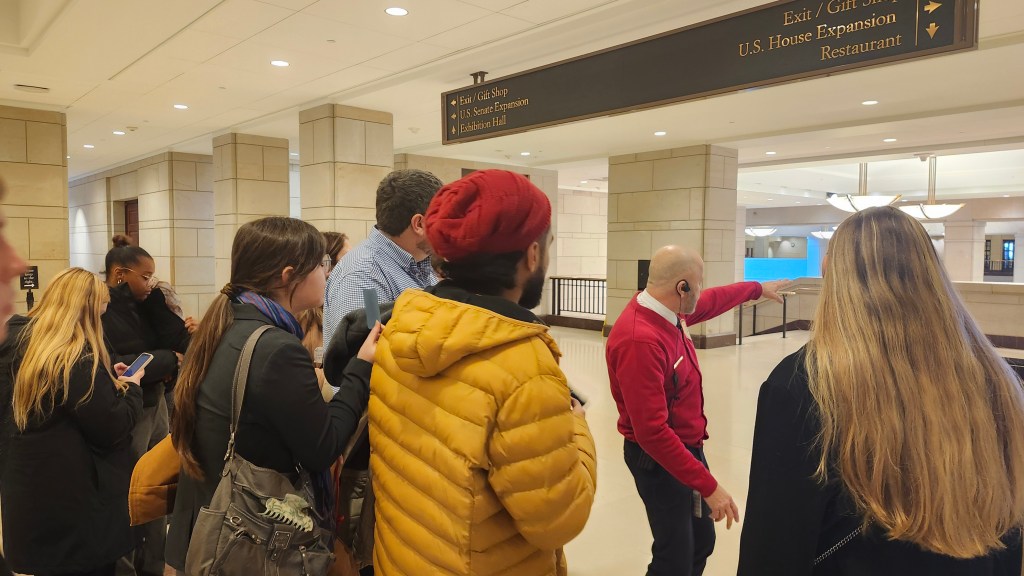
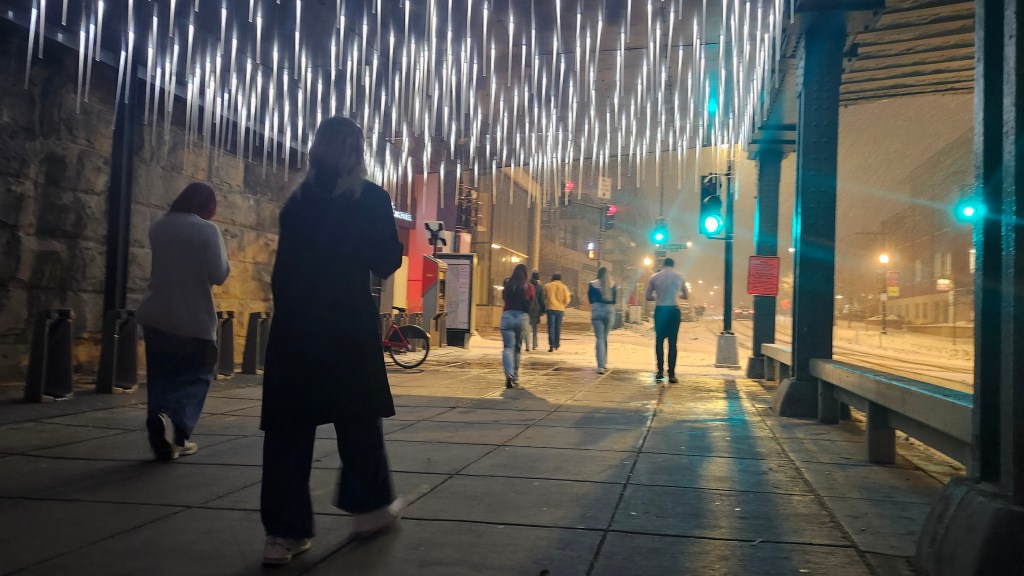
In the midst of frigid cold and relentless snowstorms blanketing the region, about 250 students from colleges across the country came together in Washington, D.C. on Jan. 7 for a week-long seminar provided by The Washington Center, a program based in the nation’s capital that offers aspiring professionals a range of internship and seminar opportunities to immerse themselves in American government.
Through a series of site visits and speaker sessions in the weeks leading up to the Jan. 20 presidential inauguration, the Inauguration Seminar exposed scholars to figures responsible for the functionality of America’s gargantuan political complex. Representatives of think tanks, national political parties, the media, Congress and other key institutions met with the students to relay their experience and answer questions.
Olivia Wade, a Salisbury University junior majoring in Political Science and one of four SU students in the program, was drawn to the Inauguration Seminar through a course and thought it would be an excellent way to gain more political knowledge.
“It was definitely worth the week, I had a lot of fun,” Wade said. “I really enjoyed getting to see the Senate in action, seeing the House of Representatives
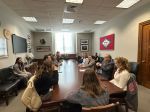

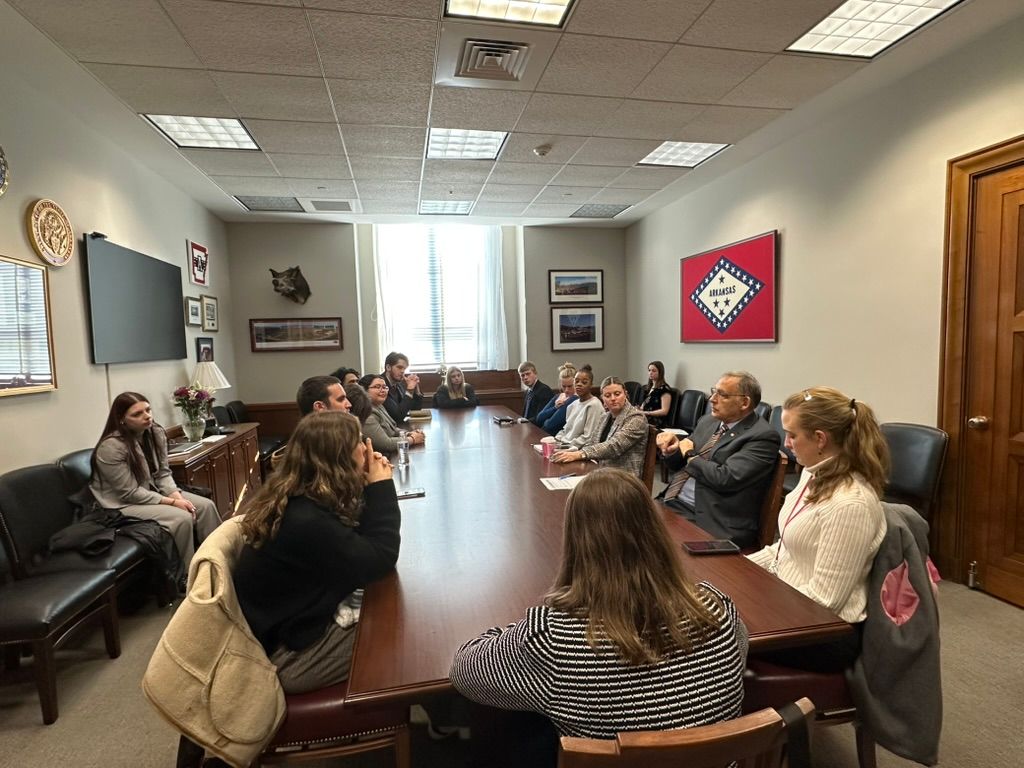
At the TWC’s Blinken Auditorium, Wade’s attention was captured by a plenary session featuring Michael Steele, a former chairman of the Republican National Committee who criticized the current state of the GOP and offered insight into the hyperpartisanship that is afflicting the U.S.
“People in today’s world are so much more polarized and it’s scary to think about how much more [divided] we might become because people are so trapped in their own views,” she said. “It was so nice to see Michael Steele, because we’re used to seeing that people vote based upon their party affiliation, not for the candidates who will actually make our country better. [Steele] challenged that way of acting.”
In an unexpected turn of events which could not have been planned, the initial days of the seminar also included optional attendance of late President Carter’s lying-in-state ceremony.
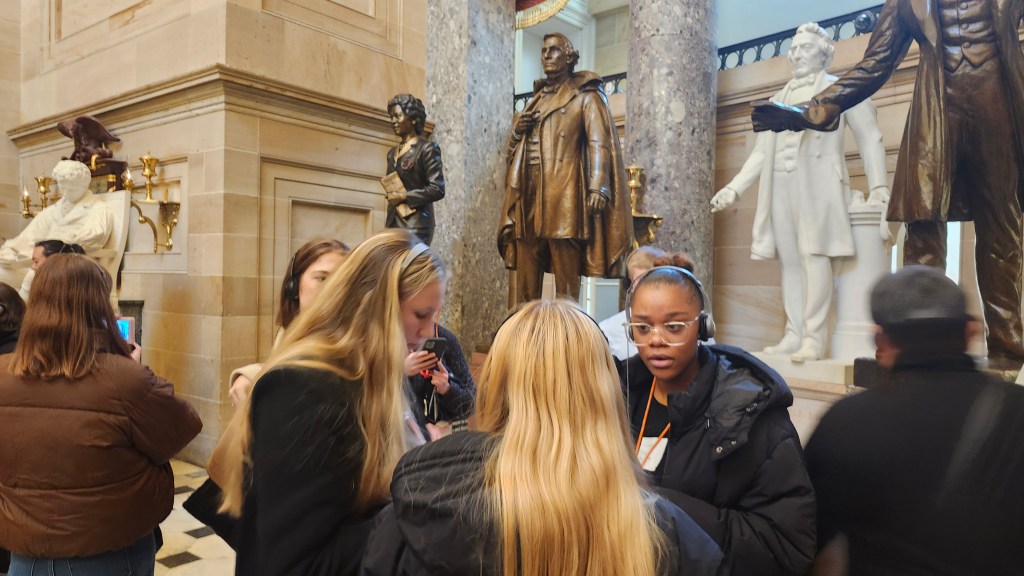
Draped in an American flag and surrounded by rifle-wielding marines, Carter’s coffin rested at the center of the Capitol rotunda from Jan. 7, when students began arriving, to Jan. 9, the day of the president’s funeral. Scores of students took advantage of the opportunity, standing in long lines outside of the Capitol building despite hours of piercing cold: experiencing the lying-in-state ceremony would not be blocked by harsh conditions.
Fallon Chernoff, one of many students who stood in line for several hours to see Carter’s lying-in-state, is an SU senior majoring in Interdisciplinary Studies. She initially decided to attend the seminar to earn extra credit hours.
“Coming here was definitely worth the four credits, because it’s only been a week and I’ve also got to meet a lot of fun people along the way,” Chernoff said. “I think it was pretty easy and a great use of my time.”
Visiting various sites with new friends was Chernoff’s favorite activity throughout the seminar. The speakers she encountered at the seminar’s morning sessions also gave her a deeper understanding of financial issues that younger generations will be encountering.
“A lot of people are worried whether they’ll be able to pay for a house, and whether they’re going to be paid as much as they should [for] the work they do,” she said, in reference to both wages and taxation. “It was a very different situation for our parents and grandparents, and now it’s a much bigger issue, especially with [growing] inflation.”
Rachel Fierro, an SU sophomore majoring in Public Relations, thought the seminar would be a decent way to network, delve deeper into politics and earn credits. She particularly enjoyed witnessing the various sites scattered throughout D.C. and meeting influential political figures, including two speakers with extensive experience in the realm of national political parties.
“I really enjoyed hearing from both Michael Steele, the former chair of the RNC, and [Jaime Harrison], the current chair of the DNC because it gave me a really good idea of both [political] standpoints as well as the different aspects of each party,” Fierro said. “Listening to them both was really insightful, and it was interesting to compare and contrast.”
Exposure to opposing political ideologies and beliefs is a key aspect of healthy bipartisanship, which Fierro realizes is essentially non-existent in the current U.S. political climate.
“The partisan divide is the most pressing [issue] our generation will have to face, I think all the issues that we have stem back to hyperpartisanship in government [and] society,” she said. “We need to bridge that gap before we can move on to and legitimately address other pressing issues.”
Featured image: Colin McEvers/The Bury Post
 Maryland Maverick News
Leave a comment